The short answer
Ask for four things before you place any order: a mill certificate tied to a heat number, a load test report per SKU, a live video walk of the production floor during your sample run, and the name and address on their business licence. A trading company can fake photographs. It cannot fake a mill certificate matched to a shipping document, or a live walk-through of a factory it does not own.
Why it matters more in this category than most
Bath safety hardware has three properties that make middlemen expensive:
- It is load-bearing. A grab bar that pulls out injures someone. Liability flows to whoever specified and supplied it.
- The specification is invisible. 1.0 mm and 1.5 mm tube look identical in a photograph. So does 201 and 316 stainless. You cannot see the difference on a sample shelf — only in a certificate.
- Repeat orders drift. The most common buyer complaint is not a bad first order, it is a third order that quietly changed alloy or wall thickness after the relationship was established.
A factory has direct control over all three. A trading company is at the mercy of whichever workshop it booked this month.
The seven checks
- Business licence scope. Ask for the licence and read the "scope of business" line. A manufacturer's licence names production of metal products. A trading company's names sales, import/export, or "wholesale". This takes two minutes and eliminates most of the field.
- Mill certificate with heat number. Not a generic "material certificate" PDF that could belong to anyone. It must carry a heat number, and that number must appear on your packing list. Ask for the certificate before the PO — a real factory produces it in a day.
- Live video walk during your sample run. Not a pre-recorded factory tour, not photos. Ask to video call while your samples are being made. Watch whether they walk to a machine or to a showroom.
- Load test report per SKU. Ask for a report showing 250 lb applied in three directions with deflection and permanent set recorded. If they send a certificate of compliance with no numbers, they did not test it.
- The awkward question: what can you not make? A factory will tell you its limits — no castings, no titanium, no PVD in-house, minimum quantities on custom lengths. A trading company claims everything is possible.
- Ask who their other customers are, by market. Not names — markets and product types. A factory serving EU and US healthcare accounts will have a compliance vocabulary; a middleman will have a price list.
- Request a production schedule with your order. Real factories can give you a start date and a completion date tied to specific lines. Trading companies give you "30–45 days" because they are waiting to hear back from someone.
Verifying certificates
Certificates are the easiest thing to fake and the easiest thing to verify. Three checks:
| Document | How to verify | Red flag |
|---|---|---|
| ISO 9001:2015 | Ask for the certificate number and the certification body, then check the body's online register | Certificate with no accreditation mark, or a body you cannot find |
| Mill certificate | Match heat number to packing list; check Mo content for 316 | No heat number; "typical values" instead of a specific heat |
| Load test report | Must show applied load, three directions, deflection figures | Statement of compliance with no measured numbers |
| ADA / ANSI reference | Understand this is self-declared — no certification body issues ADA certificates | Anyone selling you an "ADA certificate" |
Pricing tells
Price structure reveals the supply chain more reliably than any document:
| Pattern | What it usually means |
|---|---|
| A price 30–40% below everyone else | Thinner tube, lower alloy (201 instead of 304), or both |
| Same price for 304 and 316 | They are not actually supplying 316 — the material cost difference is real and unavoidable |
| No tooling charge for a custom length | They are cutting standard stock and calling it custom, or the cost is hidden in unit price |
| Price valid for 90 days on stainless | Nickel and molybdenum move monthly; a long validity means the quote is not tied to real material cost |
| MOQ of 10 pieces on a custom SKU | Not a factory — no factory sets up a line for ten pieces at a viable price |
None of these is proof on its own. Two of them together usually is.
The sample process
Samples are where most buyers get their only real evidence, and most buyers waste the opportunity by asking for a catalogue item.
- Order a sample of the exact SKU you will buy — not a "similar model". The point is to test their production, not their showroom.
- Ask for the material certificate with the sample. If they cannot tie a heat number to a sample shipment, they cannot tie one to a container either.
- Cut the sample open if the value justifies it. A sectioned bar shows wall thickness in ten seconds. Anyone who objects to destructive testing on a paid sample is telling you something.
- Test the finish, not just the look. Wrap a sample in a damp cloth for 48 hours and check for staining. Poorly passivated parts fail this quickly.
- Time the sample. A factory that takes three weeks for a stock sample will take three months for a container.
Terms that protect you
| Clause | What to write | Why |
|---|---|---|
| Alloy | Name the grade (304 / 316) and the standard (ASTM A240) | Prevents substitution on repeat orders |
| Wall thickness | State minimum in mm, not "standard" | This is where the cost is hidden |
| Load rating | 250 lb per §609.8, report per SKU | Makes the claim measurable |
| Documentation | Mill cert per heat, matched to packing list | Your only defence against substitution |
| Inspection | Third-party inspection before shipment, at your cost | Cheap insurance on a first order |
| Repeat order clause | Material specification applies to all future orders | Prevents the third-order drift |
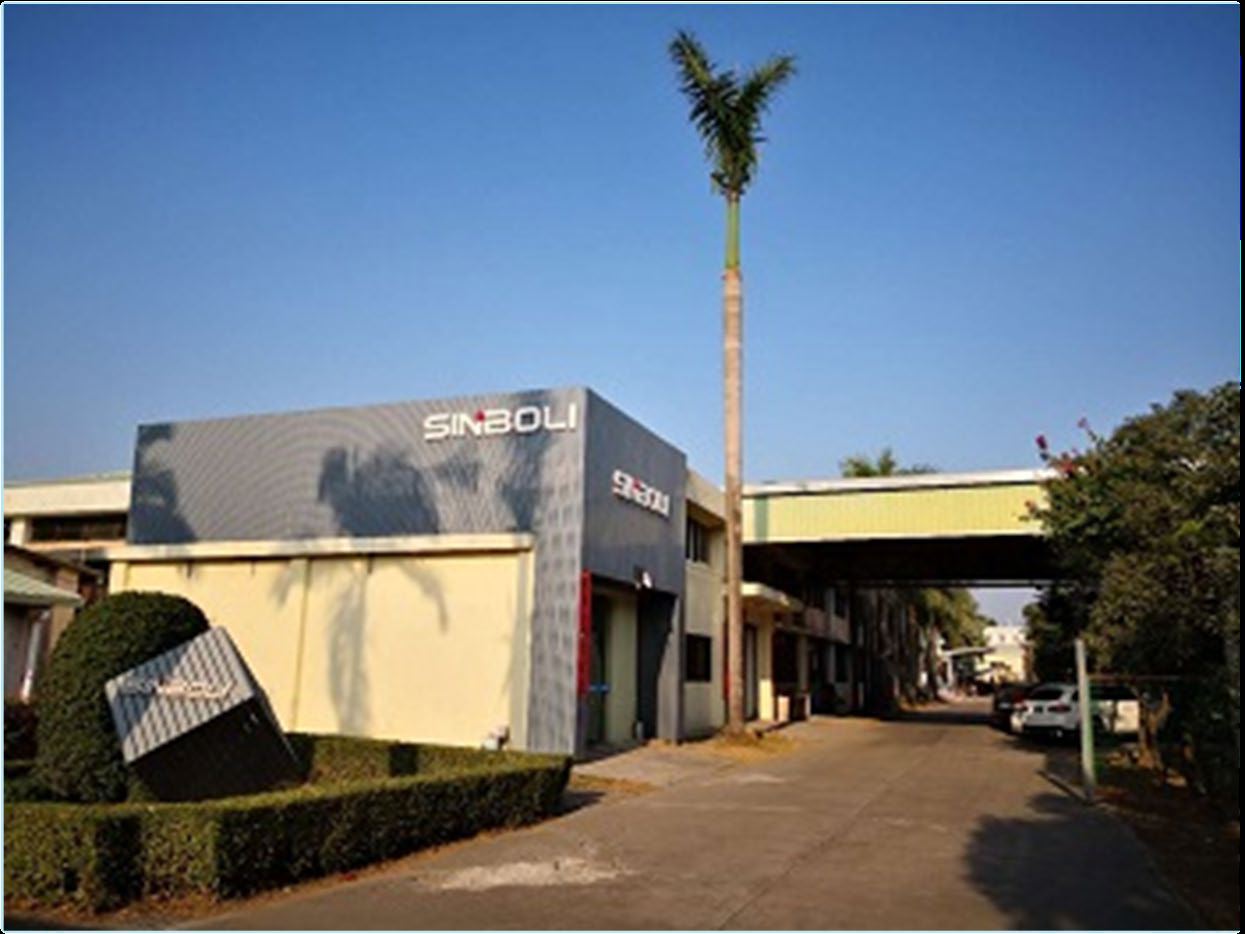
What our plant looks like
For transparency, here is what we are, so you can check us against the list above:
| Item | Detail |
|---|---|
| Legal entity | Zhongshan Sinboli Metal Manufacture Co., Ltd. |
| Plant | 4,000 m², Yumin Avenue, Dongsheng, Zhongshan, Guangdong |
| Lines | 4 production lines, cutting → forming → welding → polishing → assembly in-house |
| Capacity | 2,000 pcs per day per line, currently ~60% utilised |
| Certification | ISO 9001:2015 since 2015, covering cutting to assembly |
| Materials | 304 and 316, 1.5 mm minimum wall on load-rated SKUs |
| Documentation | Mill certificate per heat; load test report per SKU on request |
| Customers | US, EU, Australia and Southeast Asia — bath accessory brands and importers |
We will happily do a live video walk of the floor during your sample run. Ask for it — a factory that hesitates on that request is not a factory.